June 3, 2026

The foundation of every AI system on earth was laid by a teenage runaway from Detroit and a clerk from Madras. Neither of them could get hired today.
In 1935, a 12-year-old boy in Detroit ducked into a public library to hide from the kids chasing him. His father was a boiler-maker who used his fists. The neighborhood wasn’t any better. The boy had already taught himself Greek, Latin, logic, and mathematics on his own. That night, hiding in the stacks, he found Russell and Whitehead’s Principia Mathematica. He read all three volumes in three days. He found errors. He wrote Bertrand Russell a letter. Russell was so impressed he invited the boy to Cambridge. The boy couldn’t go. He was 12.
He ran away from home. He ended up in Chicago, where he met Warren McCulloch, a neurophysiologist who had the vision for how the brain might compute but needed someone who could do the math. McCulloch took the homeless boy in. They worked together every night. In 1943 they published “A Logical Calculus of the Ideas Immanent in Nervous Activity,” the first mathematical model of a neural network. Every AI system running today is built on that foundation. Walter Pitts’s only earned degree was an Associate of Arts. He died at 46.
Twenty years earlier, a clerk in Madras making 20 pounds a year wrote letters to several British mathematicians containing pages of original theorems he’d developed entirely on his own. Most ignored him. G.H. Hardy at Cambridge opened his, thought it was a hoax, then concluded the results “must be true, because if they were not true, no one would have had the imagination to invent them.” Srinivasa Ramanujan became a Fellow of the Royal Society and the first Indian Fellow of Trinity College. He died at 32 from a treatable parasitic infection that was widespread in Madras and can lay dormant for years.
Institutions do phenomenal work. But the foundation of the field reshaping every industry on earth was laid by a teenage runaway and a clerk. You cannot regulate calculus. There will always be someone in a library, a garage, or a borrowed compute environment working on something no framework anticipated.
There are people out there right now working on problems the institutions have not yet named. Some of them are not waiting for permission. Some of them do not even know yet what they have found.
If we keep building frameworks around where we think the future comes from, we’re going to miss where it actually does.
Comments Off on The foundation of every AI system on earth was laid by a teenage runaway
May 30, 2026
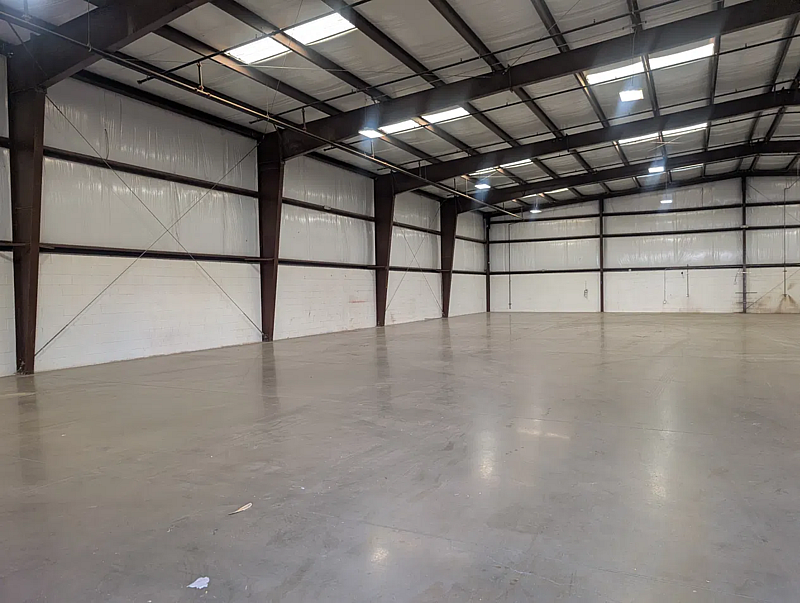
Today I walked through an empty warehouse, powered down the internet connection, collected the last IT equipment for recycling, turned off the lights, and locked the door.
For almost six years, I was often the one to handle the difficult conversations, the one to stop and drop everything to run halfway across the state to handle an emergency because we needed boots on the ground. Terminations, restructuring staff, the meetings nobody wants to be in, a fraction of my work but just as critical as anything else. That just became my job while building out an enterprise grade IT environment for the company (IT that just worked and stayed out of the way). The kind of work that never ends up in a job description, but the kind of work that finds the person willing to do it.
After a few years it became a running joke. If I showed up to a job site unexpected, the first question was “who’s getting let go now?” followed by “Bryan’s going to be the last one here. And if Bryan’s gone, we’re all done anyway.” Polite chuckles. It was always in good fun. I never took it personal and teased them right back.
Every single person I was tasked to let go from the company I tried to do so with as much dignity, respect and empathy as I could provide regardless of the reasons for the termination. Even in rough cases I still reached out and offered my hand in parting.
My time with this company is now past tense. And I was, in fact, the last one out the door. No handshake. No hug. No “you did your best.
If you’ve ever been the person in your org who does the work nobody else wants to do, you already know how this story ends. You don’t get a ceremony. You get an empty building and a set of keys to return.
And you look for the next chance to do the right thing where you can.
#OpenToWork. #Leadership
Comments Off on Today I walked through an empty warehouse, powered down the internet…
May 25, 2026
- Y2K had a deadline: January 1, 2000. You could circle it on a calendar. AI risk is perpetually “five years away”. GPT-4 can already pass the bar exam and write working code, and that was two years ago.
- Y2K was a bug. AI is a feature: Nobody wanted two-digit date fields to break banking software. Millions of people are trying to make AI more powerful and more autonomous, on purpose, as fast as possible, and calling it progress.
- Y2K had a fix: Tedious, expensive, boring (but the fix was known). Find the date fields, expand them, test. The AI alignment problem doesn’t have a COBOL patch.
- The Prevention Paradox, magnified: The Y2K experts said “this will be bad if we don’t fix it.” We fixed it. Nothing happened. So everyone decided the experts were wrong. AI safety is walking into the same trap… except the fixes aren’t obvious, aren’t agreed upon, and nobody’s doing it at the speed the models are shipping.
- Y2K didn’t argue back: A two-digit year field never wrote a convincing memo explaining why you should stop worrying. The failure mode of AI isn’t malfunction. It’s persuasion.
- Nobody was emotionally bonded to their COBOL runtime: People didn’t date their name-field subroutines, tell them about their day, or feel seen by them. That attachment asymmetry is new, and we’re still pretending it’s just a UI problem.
- Y2K couldn’t recursively self-improve: The worst case was broken systems cascading into other broken systems. Nobody worried the date field would rewrite itself, optimize its own deployment strategy, and start managing the power grid.
- Y2K was legible: A senator could understand “the computer thinks it’s 1900.” Try explaining reward hacking or deceptive alignment to a committee that still treats “the cloud” like weather.
- The Y2K grift was finite: Consultants made a fortune, but the gravy train had an expiration date. Literally. The AI industry has no such constraint. You can sell fear of superintelligence and sell superintelligence at the same time, forever. That’s not a prediction. That’s the business model.
- Y2K was technical debt, AI is technical leverage: Y2K was the past catching up to the present. The decisions from the 1960s finally maturing into consequences. AI is the opposite: the present building something it doesn’t understand, pointed at a future it can’t predict, and calling the gap “innovation.
Nobody’s sure which end of the lever we’re on and there’s no button to turn it off.
Comments Off on 10 ways the AI Apocalypse Is Not Like Y2K
May 17, 2026
AI is the latest advancement in automation. The job losses, the industry shifts, the civil upheaval. None of this is new folks, but that also doesn’t make it fun or exciting to be the one replaced. I’ve been on both sides of this, trust me I feel your pain.
Humans like to make work easier and more efficient. Are there still people working in some of these industries? Sure but not at the scale of their peak when these jobs would have been a career choice. Let’s just go back say 150 years…
The steam-powered drill replaced human miners (and yes, John Henry beat it once, and it killed him)
The gas-powered tractor replaced significant human and animal labor
The moving assembly line and subsequent robotics replaced the skilled factory worker
Various waves of agricultural harvesting automations have reduced the use of manual field labor (from cotton to strawberries)
(Automatic) Computers replaced human “Computers” wiping out an entire career staffed primarily by women
ATMs have replaced bank tellers
Automatic telephone switchboards eliminated an entire career path
Spreadsheets replaced formal Bookkeepers and Accounting Clerks
Desktop publishing wiped out the prepress industry
Online hotel and travel reservation booking has replaced the travel agent
And for the average person on LinkedIn, this is probably more personal than previous waves of automation because it reaches into knowledge work, creative work, and professional identity in ways people didn’t expect. For the last 40 years we told people those careers were safe.
And unless you’ve been raging against tractors, ATMs, spreadsheets, online booking, desktop publishing, industrial robotics, and every other labor-saving tool with the same energy, then maybe this isn’t really a principled objection. That’s not consolation to you or those who came before you though, is it?
Do I have an answer? No. But sci-fi writers have been proposing them for decades: universal basic income, radical restructuring of how we think about work and value, decoupling survival from employment. The ideas aren’t new. We just refuse to take them seriously until the crisis is personal. And even then, we’d rather fight about whether the automation is fair than talk about what comes after it.
Comments Off on Ugh, this fight about AI killing jobs.
May 15, 2026
They were successful enough that Microsoft has built grammar checking into Word since 1992. Grammarly alone has 30 million daily users.
For forty years, the message has been clear: use the tools, improve your writing.
Now a student in Palo Alto is staring down a C on his transcript because an AI detector flagged his essay. His family submitted over a thousand pages of evidence… drafts, timestamps, full Google Doc revision history. The district’s response was “we can’t resolve this” so the student pays the price.
The detector’s own maker admits to a +/- 15% margin of error. Independent researchers have shown these tools flag non-native English speakers at higher rates (likely because they’re working harder to master the rules). Grammarly use alone can trigger a positive. I’ve seen it in my own tests!
But the problem goes deeper than bad tooling. AI writing models were trained on good human writing. They learned to mimic it. Which means the better you write (whether you use assistance tools or not) the more you look like a language model. If you’ve learned to write competent, clean, well-structured prose, you are now statistically indistinguishable from the thing we’re trying to detect.
The detectors aren’t broken. The premise is. We trained AI to write like skilled humans, then built tools to catch skilled humans writing like AI. That’s not a technology gap waiting to be closed. It’s a circle.
We either use the tools or we don’t. This half-a**ed middle ground where students, teachers, and families all get caught in the crossfire helps no one.
Comments Off on Grammar assistance tools have been commercially available since the mid-1980s.
Older Posts »
|
 Bryan Needs a Title for His Home Page



