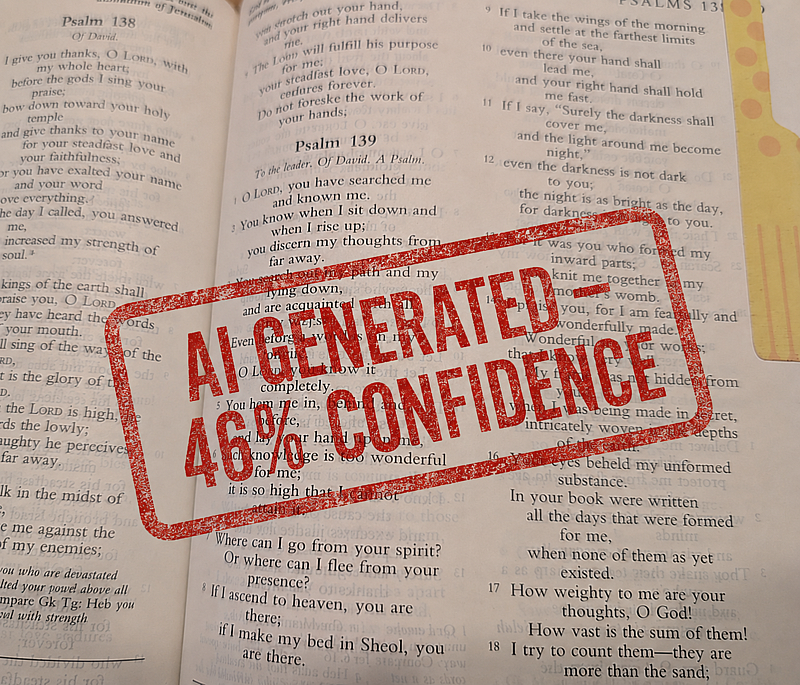
An AI detector just flagged 46% of the Pope’s new encyclical as AI-written. The encyclical is about AI ethics. It was written in a prose tradition over a thousand years old. The same detector rated other paragraphs of the same document at essentially 0%. Same author. Same document.
I ran a similar experiment on myself. I asked ChatGPT to review my personal blog from 2008-2017 and identify posts that read as AI-written. It identified 35% of them as having structured arguments, clean frameworks, numbered examples, and tidy conclusions. None of them were AI-assisted. None of them could have been. ChatGPT didn’t exist yet.
The three worst offenders: a 2009 post about Twitter with definitions and numbered use cases. A 2010 business case for mobile websites with data and a strategic conclusion. A 2014 incident postmortem with a failure chain and lessons learned. Those aren’t AI patterns. Those are writing patterns. Humans have been organizing their thoughts like this for centuries.
A year ago these same tools were being sold to help you write more clearly. Now writing clearly is the evidence you used them.
Even the article covering this story hedges: “practitioners should treat single-detector outputs as suggestive and seek multi-method forensic work before drawing firm conclusions.” Here’s a conclusion that doesn’t require forensic work: if a writing tradition predates electricity, maybe weight the patina of the source before you let an algorithm accuse it of being a machine.
#AIDetection #FalsePositive #WritingIsNotACrime #AIEthics #ContentAuthenticity
Comments Off on An AI detector just flagged 46% of the Pope’s new encyclical as AI-written.
They were successful enough that Microsoft has built grammar checking into Word since 1992. Grammarly alone has 30 million daily users.
For forty years, the message has been clear: use the tools, improve your writing.
Now a student in Palo Alto is staring down a C on his transcript because an AI detector flagged his essay. His family submitted over a thousand pages of evidence… drafts, timestamps, full Google Doc revision history. The district’s response was “we can’t resolve this” so the student pays the price.
The detector’s own maker admits to a +/- 15% margin of error. Independent researchers have shown these tools flag non-native English speakers at higher rates (likely because they’re working harder to master the rules). Grammarly use alone can trigger a positive. I’ve seen it in my own tests!
But the problem goes deeper than bad tooling. AI writing models were trained on good human writing. They learned to mimic it. Which means the better you write (whether you use assistance tools or not) the more you look like a language model. If you’ve learned to write competent, clean, well-structured prose, you are now statistically indistinguishable from the thing we’re trying to detect.
The detectors aren’t broken. The premise is. We trained AI to write like skilled humans, then built tools to catch skilled humans writing like AI. That’s not a technology gap waiting to be closed. It’s a circle.
We either use the tools or we don’t. This half-a**ed middle ground where students, teachers, and families all get caught in the crossfire helps no one.
Comments Off on Grammar assistance tools have been commercially available since the mid-1980s.
 Bryan Needs a Title for His Home Page



